
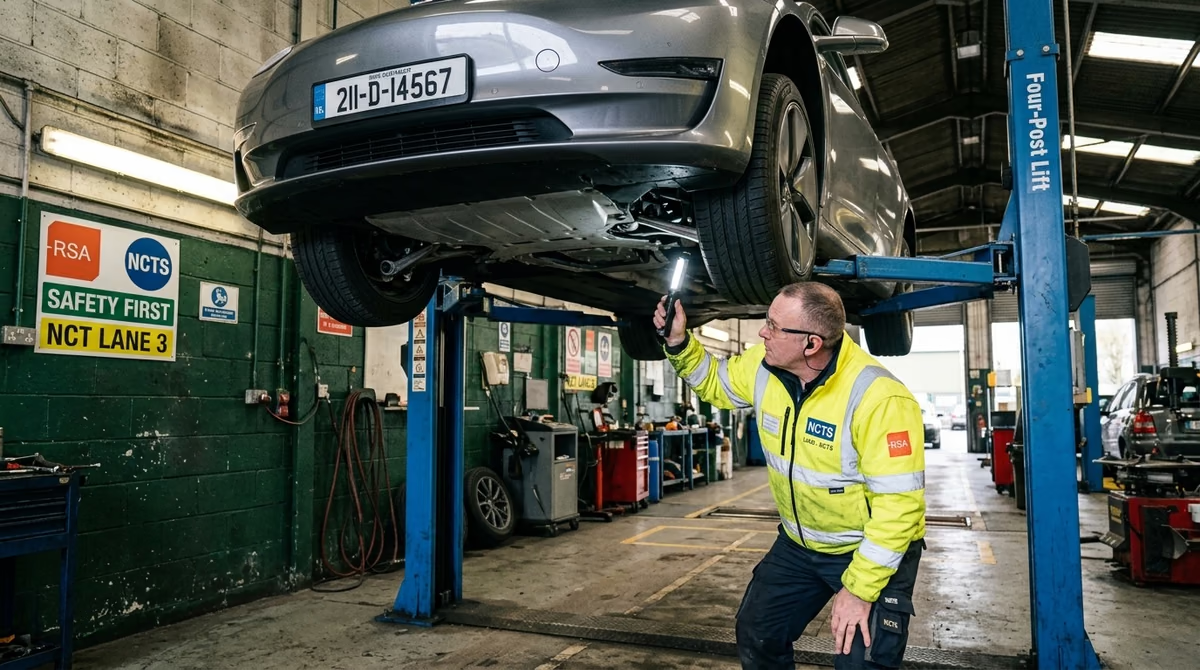
Your EV is heavier than you think. The testers know it.
There’s a myth going around that electric cars get a free pass at the NCT. People assume because there’s no exhaust pipe, there’s nothing to fail. They’re wrong.
If you’re bringing a four-year-old Tesla Model 3 or a Nissan Leaf to the test centre, pay attention. She skips the emissions test, sure. But the tester puts her on the lift and checks everything else. The failure rates for EVs on their first test are climbing.
When an EV fails unexpectedly, you have 30 days to fix it and pass the re-test. The queues are fierce. Trying to find a quick slot on the official site is a waste of time. Our NCT cancellation slot scanner does the hard work for you. It grabs an appointment before your 30-day window slams shut.
| Inspection Item | Petrol/Diesel | EV | Why Different |
|---|---|---|---|
| Exhaust emissions | Tested | Skipped | No combustion engine |
| Suspension components | Standard wear | Accelerated wear | +300–500kg battery weight |
| Tyre inner shoulder | Standard wear | Faster wear | Weight + torque |
| Rear brake pads/discs | Regular wear | Corrosion risk | Regen rarely uses rear brakes |
| Lights, bodywork, steering | Identical | Identical | No difference |
Why EV weight ruins suspension
Electric cars lug around massive lithium battery packs. A Tesla Model Y weighs over 2,054kg. A petrol VW Golf is about 1,345kg. That’s nearly a tonne of difference.
Every time you hit a pothole, that extra mass slams directly through the suspension. Your wishbone bushings, ball joints, and shock absorbers take a hammering. By year four, components that would be grand on a diesel are completely banjaxed on an EV. The instant torque also shreds the inner shoulders of your tyres faster than you’d expect. In fact, recent Fail Dangerous statistics show tyre damage is a major reason cars are forced off the road.
The rear brake corrosion problem
Most EV drivers rely heavily on regenerative braking. Lift off the accelerator, the motor slows the car, and the battery recharges. It’s brilliant for range. It’s terrible for your physical brakes.
Because the actual brakes are rarely used hard, the rear discs and pads just sit there gathering rust in the Irish rain. When the tester checks them at the Fonthill NCT centre — or any other spot on our NCT locations page — they fail you for corroded or seized brakes. The fix is expensive.
What EV owners must check before testing
Don’t just turn up hoping for a pass. Do a few simple checks yourself.
Turn your steering wheel fully on lock and inspect the inside edge of your front tyres. That’s where heavy EVs wear out fastest. Look at your brake discs through the alloys. If they’re caked in orange rust, take the car out and do a few firm stops on an empty road to scrub them clean.
Check your lights, wipers, and horn. They fail exactly the same way they do on a petrol car. Don’t give the Gardaí a reason to pull you over.
Frequently Asked Questions
Do electric cars have to do the NCT in Ireland?
Yes. All cars over 4 years old must pass the NCT regardless of fuel type. The exhaust emissions section is skipped for EVs, but all 90+ other inspection points — suspension, tyres, brakes, lights, bodywork — are tested in full.
Why do electric cars wear out tyres and suspension faster?
EV battery packs add 300kg to 500kg of extra kerb weight compared to equivalent petrol cars. That extra mass is transmitted directly through the suspension and tyres on every pothole and corner. Inner shoulder wear and suspension bush failure happen significantly faster.
How much is the NCT re-test fee in 2026?
€40 for a re-test that requires the test lane. A visual-only recheck — for example confirming a replaced tyre — is free of charge. The re-test must be done within 30 days of the original fail.