
The High Cost of Failure in 2026
In previous years, failing your NCT was an annoyance. In 2026, it is a logistical nightmare. With the current NCT backlog stretching to over six months in busy centres like Northpoint and Fonthill, failing your test doesn’t just mean a €40 re-test fee—it often means falling into “booking limbo.”
If your car fails on a “major” defect, you might be taken off the road immediately. If it requires a lane re-test (using equipment), you enter the same queue as everyone else. The strategy for Irish drivers this year is simple: Pass First Time.
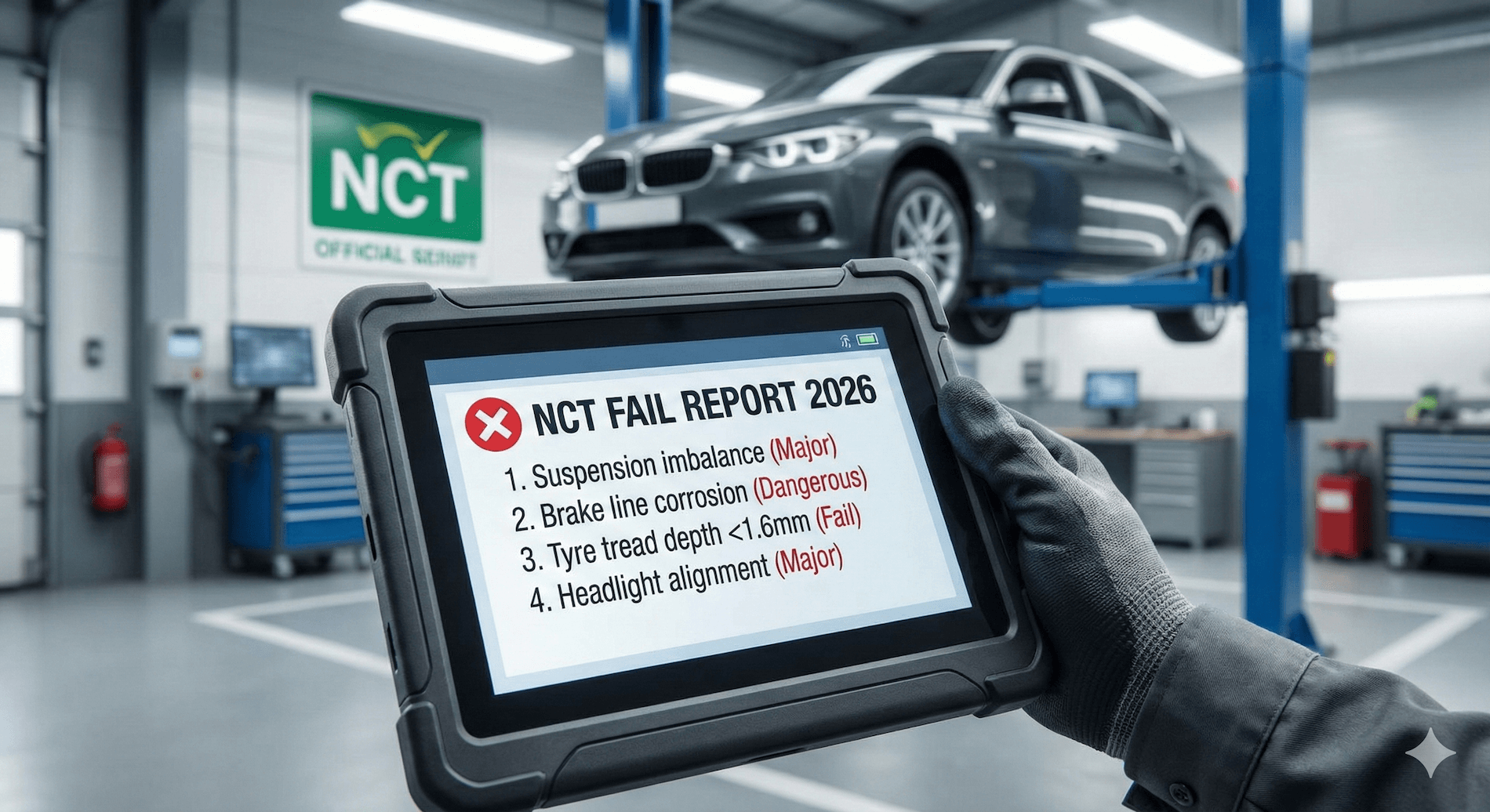
Based on the latest trends from the NCTS, we have compiled the “Big Five”—the most common reasons Irish cars are being turned away this year, and crucially, how you can fix them before you arrive at the test centre.
1. Suspension and Steering (The “Pothole Effect”)
It is no secret that Irish roads have taken a toll on our vehicles. Suspension imbalance and steering linkage wear are consistently top of the failure list. The NCTS testers are using increasingly sensitive equipment to detect imbalances that you might not feel while driving on the M50.
The Fix: Listen for knocks or clunks when going over speed bumps. If your steering feels “loose” or the car drifts to one side, have a mechanic check your wishbone bushes and track rod ends a week before the test.
2. Lighting and Electrical (The “Silly” Fails)
Nothing is more frustrating than failing for a €5 bulb, yet it happens to thousands of drivers every month. In 2026, we are also seeing a spike in failures for misaligned headlights. If you have replaced a bulb yourself recently, you may have knocked the alignment out.
The Fix: Park facing a wall and switch on your lights. Ensure they are level. Check every single bulb, including the number plate lights and indicators. This is the easiest win on the sheet.
3. Tyres: Condition and Tread Depth
The RSA standards for tyres are strictly enforced. It’s not just about the 1.6mm legal limit (though we recommend replacing at 3mm for safety). Testers are looking for:
- Sidewall damage: Bulges or cuts from hitting kerbs.
- Age cracking: Older tyres that have hardened and cracked.
- E-Marks: Ensure your tyres conform to EU regulations.
Driving on dangerous tyres is a major risk. As noted in our guide on insurance validity, a crash caused by bald tyres can void your policy instantly.
4. Brake Lines and Performance
The “Slip Slide” test measures brake imbalance. If one side of your car brakes harder than the other, you will spin out in an emergency. Often, this isn’t the pads or discs, but the brake lines. In Ireland’s damp climate, the metal lines underneath the car are prone to corrosion.
The Fix: A visual check by a mechanic can spot rusted lines before they burst during the high-pressure NCT test.
5. Dashboard Warning Lights
Since the updated RSA vehicle standards, dashboard warning lights are an instant fail. You cannot tape over them (yes, people try). Common culprits include:
- Airbag Light (SRS): Often caused by a loose connection under the seat.
- Engine Management Light (MIL): This could be emissions-related.
- ABS Light: A critical safety failure.
Failed? Don’t Panic, But Act Fast
If you do fail, you have 21 days to complete a re-test. If you miss this window, you must undergo the full test again—and pay the full fee again. The problem? Finding a re-test slot within that narrow window can be impossible on the official website.
Summary
Preparation is the key to surviving the 2026 NCT system. A €50 pre-NCT check at your local garage is far cheaper than the cost of a re-test, the time lost booking a new slot, and the stress of driving without a valid certificate. Check your lights, kick your tyres, and book your slot early.
Leave a Reply